Canadian Snowbird Retirement: TRNC vs Florida Winter 2026
What changed: rental withholding rates, residential VAT rates, title transfer fee, and capital gains tax corrected to current legislation.
1. Florida vs TRNC: Six-Month Cost Comparison
The two destinations are comparable on winter climate, but produce different calculations on property cost, currency and distance.
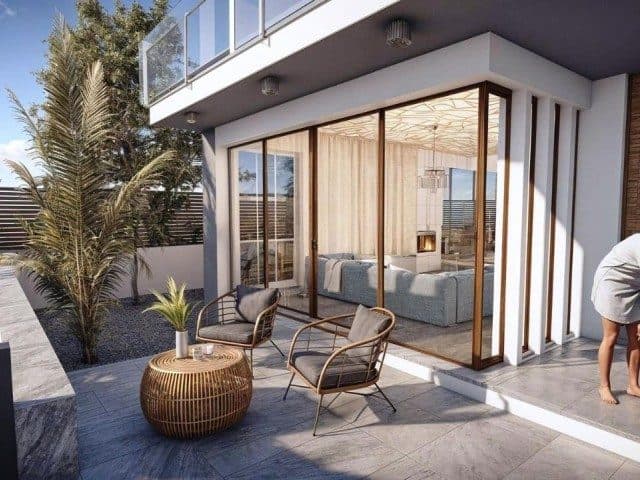
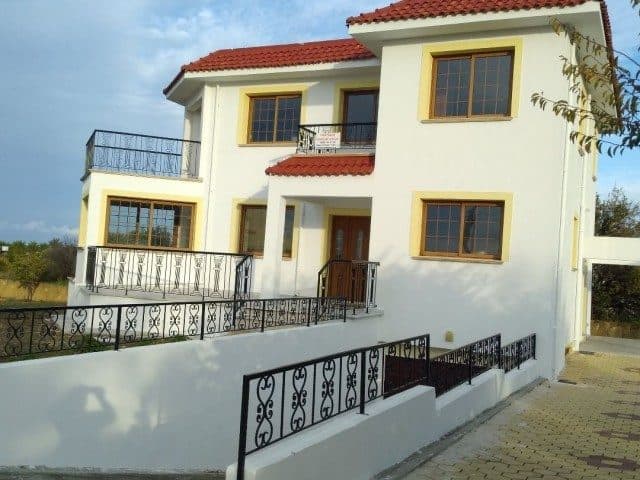
In 2026, a quieter third option is emerging for mid-tier retirees with CAD 70-120K/year income and no desire to rent the same Gulf Coast condo for the 15th consecutive year: TRNC. A £180K Kyrenia villa replaces a CAD 2,500-3,500/month Florida rental, builds equity instead of burning it, and operates at a total cost of living around £900-1,300/month. Critically, North Cyprus has no double tax treaty with Canada, no EU-style residency complexity, and no US-like 183-day substantial-presence trap. This is the cleanest cost analysis in the Mediterranean for a Canadian retiree who already understands how to keep provincial health coverage.
The Florida snowbird rental math in 2025 has drifted upward: a decent 2-bedroom condo on the Gulf Coast runs CAD 2,500-4,000/month in-season, plus dining CAD 1,200/month, car rental CAD 900/month, green fees, groceries. Conservative all-in: CAD 35-45K for six months. You rent, you leave, you build zero equity. The TRNC alternative reframes the spend: CAD 35K buys roughly £20K in 2026, which is either ten months of all-in TRNC living costs or a substantial down payment on the £180K Kyrenia villa. Instead of renting shelter, you own it and get summer rental yield on top.
Delta: TRNC saves CAD 15-25K/year vs Florida rental, and — unlike Florida — delivers a £180K equity position that appreciates and produces summer rental cash. Over five winters, roughly CAD 75-125K retained in your hands, not a Florida landlord’s.
| Line item (6 months) | Florida rent | TRNC own |
|---|---|---|
| Accommodation | CAD 18-24K rent | £0 (owned) |
| Utilities + internet | CAD 1,200 | £450-700 |
| Car | CAD 4,500 rental | £2,500 lease or £4,500 used |
| Groceries + dining | CAD 6,000 | £2,700-3,500 |
| Private health top-up | CAD 1,800-3,000 | £500-1,000 |
| Flights (couple) | CAD 2,400 | CAD 3,200 (Istanbul + Ercan) |
| Total 6-month | CAD 34-41K | £9-13K (~CAD 15-22K) |
- Snowbird window: 180 days TRNC + 185 days Canada (maintains tax residency)
- Canadian tax residence: full T1 filer, provincial health card active
- CAD-GBP reference: 1 GBP = 1.70 CAD (2026 baseline)
- Provincial health rules: Ontario OHIP 7-month absence limit applied as representative
2. Canadian Tax Residency: Keeping OAS, CPP, Provincial Health
Spending winters abroad does not by itself break Canadian tax residency — what matters is the ties you keep, not the days you spend.
A six-month TRNC pattern — provided your principal residence, spouse, and provincial health card remain in Canada — preserves full Canadian tax residency. You continue to file T1, claim the same credits, and keep OAS and CPP paid into your Canadian bank account. The 183-day US rule (substantial presence test) does not apply to TRNC; TRNC has no comparable rule.
Provincial health coverage is the operational constraint. Ontario OHIP allows up to 212 days absence per year; BC MSP allows 6 months; Quebec RAMQ allows 183 days. If you exceed, your provincial coverage pauses — a catastrophic gap for a 65+ retiree. The standard TRNC snowbird pattern therefore targets 180-185 TRNC days and 180-185 Canada days, splitting the year with a ~10-day travel buffer. Cross the provincial limit once and you risk a full calendar year of ineligibility.
3. Property Purchase Process for Canadian Passport
The process is permitted and regulated for foreign buyers; there is no Canada-specific restriction, but the order of steps matters.
Under the rules in force, a foreigner may acquire, with Council of Ministers permission, at most 3 apartments, or a plot of at most 1,338 m² with a single home on it, or 1 detached house on land of at most 3,300 m², or 2 villas in a housing estate. Council of Ministers permission to acquire property is required — no official time has been published for the decision. The AML law of 4 January 2024 requires full source-of-funds documentation: bank statements, investment account statements, inheritance documents, home-sale proceeds — whatever funds the purchase. Canadian bank reference letters translate into formal AML acceptance well.
Hidden costs on top of property price: independent solicitor £1,500-2,500 (never share with seller’s lawyer), title transfer fee 4% on the 1st property, 5.5% on the 2nd, 6% on the 3rd under the temporary schedule (paid within 75 working days of the permission’s publication in the Official Gazette), VAT on new-build 5% (homes below 300 m² covered area) or 10% (300 m² and above), where the seller is VAT-registered, stamp duty 0.5%, AML apostille £200-400 for Canadian documents. Furnishing adds £5-12K for a 2+1 villa.
4. CRA Reporting: Form T1135, Rental Income, Capital Gains
Foreign assets above a set threshold are reportable to the CRA, and a property purchase can cross that line.
Property held purely for personal use is exempt from T1135 reporting — but a property that generates rental income (even occasional) is reportable. Most TRNC snowbird properties with summer letting fall under the reportable category. Late-filing penalty is CAD 25/day (capped at CAD 2,500), while gross-negligence failure can reach CAD 24,000 or 5% of the unreported property cost — whichever is greater.
TRNC rental income declared on your T1 at marginal rate. TRNC rental withholding tax you pay as the owner (8% of gross rent on Turkish lira leases, 13% on foreign-currency leases; Decree-Law 105/2020, rates may change) claimed as foreign tax credit on line 40500 — non-treaty unilateral relief. Keep original TRNC tax receipts; CRA will want documentary proof. On eventual sale, capital gain calculated in CAD terms (FMV at disposition less adjusted cost base in CAD) is 50% inclusion into taxable income at marginal rate. TRNC capital gains tax on a sale: Professional seller: effective 4%. Deducted by the Land Registry at transfer, on the higher of the sale price and the Land Registry’s assessed value. The one-time home-and-plot exemption applies only to a TRNC-citizen seller; foreigners and professionals cannot use it. Source: Income Tax Law 24/1982 s.4(5), 6(12), 31(1). TRNC tax paid on the sale is claimable as foreign tax credit in Canada.
5. Healthcare: Private Insurance + Turkey Medical Tourism
Provincial plans offer limited coverage abroad; a private policy covering the winter months is the standard answer.
Snowbirds therefore carry private travel medical insurance. A couple aged 65-70 in good health typically pays CAD 1,800-3,000/year for a policy covering 180 days abroad with no pre-existing condition exclusions if declared. For routine TRNC care (GP, dental, pharmacy, specialist consultation), pay-per-visit is standard: GP consultation £30-60, specialist £50-120, dental cleaning £30-50, prescription drugs often 30-50% below Canadian private-pay prices.
Major elective procedures (knee/hip replacement, cardiac stent, cataract, dental implant) most TRNC snowbirds get done in Istanbul Turkish private hospitals (JCI-accredited: Acıbadem, Memorial, American Hospital, Florence Nightingale). A full cardiac workup in Istanbul costs CAD 800-1,500 out-of-pocket vs CAD 2,500+ in Canada private. Hip replacement CAD 10-15K all-in vs CAD 20-40K Canada private or 1-2 year Canada public wait. Flight Ercan-Istanbul 1h, domestic; Canadian snowbirds routinely combine this with a Turkey sightseeing week.
6. Death, Estate, and Heirs
Owning property in two countries raises questions a single will cannot resolve.
Canadian tax, however, applies “deemed disposition at death” — the estate is deemed to have sold the property at fair market value on the date of death, and capital gain (FMV minus adjusted cost base in CAD) is added to the final T1. 50% inclusion rate, taxed at the deceased’s marginal rate. Provincial probate fees apply to total estate value including the TRNC property. Heirs receive the TRNC property with a stepped-up Canadian cost base at FMV.
Practical planning: (1) Separate TRNC will drafted by a TRNC lawyer handles local succession (deed transfer, utility and tax clearance) cheaply; (2) Canadian will covers tax and estate execution; (3) If heirs plan to sell the TRNC property: TRNC capital gains tax on a sale: Professional seller: effective 4%. Deducted by the Land Registry at transfer, on the higher of the sale price and the Land Registry’s assessed value. The one-time home-and-plot exemption applies only to a TRNC-citizen seller; foreigners and professionals cannot use it. Source: Income Tax Law 24/1982 s.4(5), 6(12), 31(1). TRNC tax paid on that sale is claimable as foreign tax credit on the final Canadian return. Budget 10-15% of TRNC property appreciation for CRA on eventual sale or death; plan around that rather than ignore it.
Key takeaways
Keep your Canadian residency
Wintering abroad need not break your tax residency. As long as your Canadian ties continue, your status holds — but document it.
Know the T1135 threshold
Foreign assets above a set threshold must be reported to the CRA. A property purchase can cross it — ask your accountant before, not after.
Health cover is its own line
Provincial health coverage works only partly abroad. A private policy covering the winter months is standard practice.
Settle the estate question early
Owning property in TRNC raises questions your Canadian will may not answer. Both sides need arranging.